

What are transport packaging test?
—For those in urgent need of solutions to packaging issues in logistics
What is a transport packaging test?
This test evaluates the durability of products and goods against environmental factors such as physical impacts, vibrations and temperature fluctuations that they may be subjected to during transport.
This is carried out to maintain product quality and prevent damage during transport.
Goods in transit are constantly exposed to external forces such as vibration, impact and compression. Consequently, if the packaging is not designed appropriately, this can lead to problems such as product damage or crushed boxes. Furthermore, in an effort to avoid such problems, it is not uncommon for packaging to be excessive.
The Purpose of Transport Packaging Testing and a Comparison with Conventional Methods
If damaged products are delivered, a company’s reputation will suffer, and the costs associated with returns and exchanges will increase. Transport packaging testing helps mitigate these risks and is used to improve business efficiency. Unlike actual transportation, its greatest advantage is that tests can be repeated under the same conditions.
Purpose of Transport Packaging Tests
- To verify whether the product and its packaging can withstand the vibrations and shocks encountered during transport.
- To ensure that the product’s inherent functions and performance are not compromised during transport, and that it is delivered to the customer in a safe and high-quality condition.
- To correctly assess the most suitable cushioning materials, packaging structures and shapes, and to determine efficient packaging specifications whilst minimising damage.
- To verify compliance with official standards such as ISTA, ASTM, ISO and JIS, and to ensure that the product meets a wide range of domestic and international transport requirements.
- To review excessive packaging materials and unnecessary costs, with a view to improving delivery efficiency and reducing logistics costs.
Comparison of Conventional Methods and Transport Packaging Tests
| Transport Packaging Tests | ||
|---|---|---|
| Evaluation Criteria | Conventional method (actual transport) | |
| Judgement and Assessment |
Qualitative assessment A rudimentary assessment based on actually carrying the item and concluding, ‘It didn’t break, so it’s fine’ |
Quantitative and scientific It reproduces the exact same vibrations and impacts, enabling scientific assessment |
| Exam duration |
prolonged As this involves driving the actual vehicle, it will require a significant time commitment and the availability of the relevant dates. |
Significant reduction It can dramatically shorten the development cycle—for example, by completing the process in 30 minutes |
| Cost |
High costs every time Vehicle costs, fuel costs, drivers’ wages and so on are incurred every time a test is carried out |
Low running costs The cost of using the test equipment only |
| Data Collection |
Ex post verification only A ‘post-delivery’ inspection to check the exterior and interior once delivery is complete |
Real-time Sensor measurements enable immediate identification of when and under what load a failure occurred |
| Weather and Road Conditions |
Uncontrollable Due to a combination of factors such as the season, weather and road surface conditions, the results are not reproducible. |
Complete control Consistently reproducible conditions (*Temperature and humidity can also be reproduced when used in conjunction with a constant temperature and humidity chamber) |
| Overall rating |
Not suitable for iterative evaluation and optimisation |
It is possible to perfectly replicate the ‘exact same transport conditions’ as many times as required! |
Contents and Standards for Transport Packaging Tests
Details of Transport Packaging Tests
There are many different types of transport packaging tests designed to simulate the various environmental factors that products encounter during transport, in order to verify their durability and quality. The following are some typical examples of such tests.
| Vibration testing |
We simulate the vibrations to which products are subjected during transport by lorry, aeroplane or ship, in order to verify their durability. By subjecting products and packaging to vibrations of a specific frequency and amplitude, we assess their ability to withstand such vibrations, thereby helping to reduce the risk of damage. |
|---|---|
| Drop Impact Test |
We simulate the sudden forces and drops that products are subjected to during transport, and verify whether the packaging materials and products can withstand such impacts. This is done to prevent damage that may occur during actual handling. |
| Compression test |
This is carried out to verify whether the product can withstand loads or pressure from above during transport or storage. We assess the durability of products—such as those on pallets or in mixed loads—when they are stacked or placed beneath heavy loads, to ensure that they do not become crushed or deformed. |
| Temperature and Humidity Testing |
We assess the product’s resistance to changes in temperature and humidity that it may be subjected to during transport. It is used in particular for products that are sensitive to changes in temperature and humidity, such as food, cosmetics and electronic devices. We will investigate how sudden changes in temperature and high humidity affect the quality and functionality of the product. |
These tests verify that the products and packaging can withstand various transport conditions safely, thereby ensuring product quality.
Key Standards for Transport Packaging Testing
|
ISTA (International Safe Transit Association) |
International testing standards. One of the key quality indicators for companies aiming to expand globally. |
|---|---|
|
ASTM D 4169 (American Society for Testing and Materials) |
An American standard for materials testing. One of the international standards for logistics quality. |
| ISO 4180 | International transport standards on a par with ISTA and ASTM |
| JIS Z 0200 | Transport standards within Japan.The status of the Japanese version of ISO 4180. |
Test Cases
Development of New Packaging Specifications | Kirin Holdings
Challenges
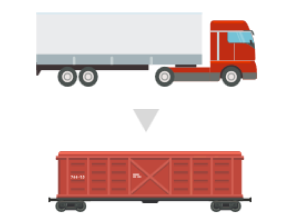
Since switching from lorry transport to rail container transport, there have been frequent instances of ‘labels becoming scuffed or smudged’—a problem that had not occurred previously.
Process
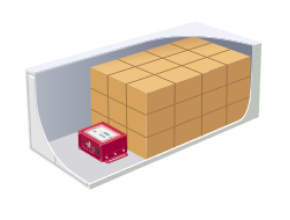
Vibration data was collected whilst the container was being transported by rail. The data waveforms were fed into a ‘three-axis simultaneous vibration test system’ to reproduce vibrations equivalent to those encountered in real-world conditions.
Results

It was determined that specific ‘frequencies and accelerations’ were the cause of friction. We developed ‘anti-friction cartons’ to minimise friction, thereby achieving a fundamental solution to transport-related problems.
Features of IMV transport packaging tests
We have a wide range of vibration test equipment capable of accurately simulating the vibrations to which products are subjected during transport. This enables companies to predict how their products will behave under actual transport conditions and to make improvements to packaging and design accordingly.
Whilst most packaged goods are transported without being secured to the load platform, vibration tests often involve securing the packaged goods to the vibration table using straps or similar means. However, it is also possible to conduct tests on goods that are transported without being secured by, for example, fitting a guard rail to the vibration table to prevent the packaged goods from falling off.
*Please note that this service may not be available depending on the weight of the goods, amongst other factors.
With a track record of over 30,000 tests to date, you can entrust us with everything from the formulation of test plans onwards.
Daily necessities, drinks and food

Test specimens
Cardboard packaging, plastic bottles, cosmetics boxes, packaging
Details of Reproduction and Verification
Optimising packaging to prevent label wear, box dents and product collapse, and to facilitate consolidated deliveries
Precision machinery, household appliances and e-commerce parcels

Test specimens
Computers, white goods, electronic components, printed circuit boards
Details of Reproduction and Verification
Drop and impact resistance testing; compliance with strict packaging standards for individual deliveries via e-commerce platforms such as Amazon
Precision machinery, household appliances and e-commerce parcels

Test specimens
Vehicle battery, radiator, inverter
Details of Reproduction and Verification
Assessment of accumulated fatigue in long-distance transport (including rail and sea), and simulation of complex vibrations from multiple axes
Inquiries
Please wait a moment for the form to appear.
If the form does not appear, pleasecontact us