×

Products Product

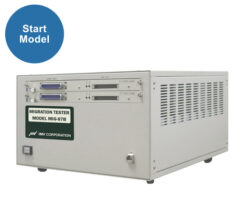
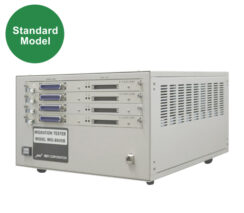
Migration test apparatus(Insulation Deterioration Assessment Test Equipment)

Migration is a phenomenon in which the materials forming the substrate cause the metal to dissolve under the influence of temperature and humidity, leading to a deterioration in insulation.
As this can lead to product defects, testing and evaluation during the manufacturing process are required.

Main factors contributing to migration

Materials
Rigid printed circuit boards, flexible printed circuit boards, glass fibre cloth, underfill materials, build-up film, resin packages,
Sealing compounds, insulating inks, conductive materials, adhesives, interlayer insulation materials, cleaning solutions, solder resist, coverlay films
Process
Plating residues, flux residues, etching residues, foreign matter contamination, through-holes, via holes
Design
Fine pitch (narrow conductor spacing), conductor and electrode shapes, through-hole clearances, multilayer printed circuit boards

Features of IMV’s migration test equipment

1 channel / 1 power supply / 1 measurement circuit

As each channel is equipped with its own power supply and measurement circuit, even if migration occurs in one channel, the other channels remain completely unaffected.

1 channel / 1 power supply / 1 measurement circuit

Monitoring and Control of Applied Voltage

The voltage applied at each individual soldering point on each channel is continuously monitored and controlled to ensure it remains within the set values.

Cases for which we are consulted

From ‘pre-verification when changing materials’ to ‘in-house testing and continuous automated measurement’, we will provide proposals tailored to your specific stage of development.

  • Development and Design

    Prevention and Compliance with Standards
    • New substrate materials (high heat resistance, thin-profile): Insulation reliability assessment upon adoption
    • Fine-line wiring and high-density mounting (finer wiring patterns): Verification during the transition to fine-line wiring and high-density mounting
    • Automotive standards (such as AEC-Q) and compliance with international standards
    • Request for evidence (Submission of data for product warranty purposes to customers)
    • Use of new materials (non-cyanide/halogen-free solder, etc.)
  • Production and Manufacturing

    Process Issues and Stabilisation
    • New surface treatments (ENIG, HASL, OSP, etc.): Comparison and evaluation for implementation
    • Changes to the temperature profile(Reflow/wave soldering)
    • Review of the cleaning process(Switch to non-clean processes / change of cleaning agent)
    • Verification of product reliability equivalence following the transfer of the production line
    • Management of contract manufacturers (EMS) and safety assessment of flux residues
  • Quality Assurance and Reliability

    Improving testing efficiency and accuracy
    • Suspected sudden short circuit(Leakage current during temperature and humidity testing)
    • Reducing variation in evaluation results and improving measurement reproducibility
    • Commencement of high-voltage acceleration testing (shortening of the evaluation period)
    • Dendritic crystals (dendrites) and whisker monitoring
    • Identifying the causes of market failures · In-house testing (reducing outsourcing costs)
  • Expanding Applications and the Environment

    Designed for high-stress environments
    • Development of in-vehicle ECUs and high-voltage EV circuit boards and ensuring high reliability
    • Evaluation of high-frequency, high-power printed circuit boards for 5G/6G and servers
    • Meeting the stringent safety standards for medical and precision equipment
    • For high-humidity and condensation environments (e.g. equipment installed outdoors or in cold regions)
    • Aerospace and defence sectors and other fields involving the development of circuit boards for extreme environments
  • Organisational and Operational Structure

    Business Efficiency and Automation
    • Moving away from manual measurements (Automatic simultaneous measurement of multiple channels)
    • Automatic data logging (Continuous monitoring during long-term prototyping)
    • Preventing the overlooking of minute changes in resistance (Real-time waveform monitoring)
    • Standardisation of testing operations and elimination of the risk of reliance on individual expertise
    • Establishment of an in-house evaluation system for rapid assessment and analysis

Migration test apparatus