

High-Frequency 2,000Hz Support: Replicating Real-World Environments via High-Frequency 3-Axis Simultaneous Vibration Testing
In product reliability evaluation, 3-axis simultaneous vibration testing is the premier method for “reducing test duration” and “replicating environments that closely mirror the real world.”
While 3-axis simultaneous testing was previously limited to low-frequency ranges (such as seismic testing), this case study introduces a breakthrough. By utilizing our newly developed vibration system, we have achieved 3-axis simultaneous excitation up to a maximum frequency of 2,000Hz. Here, we present a case study demonstrating how this technology replicates the harsh operating environments of automotive components and electronic devices with unparalleled precision.
Objective of the Test
In conventional single-axis excitation testing, X, Y, and Z axes are tested sequentially, requiring significant man-hours for setup changes. Furthermore, in real-world environments, vibrations intersect in complex ways, meaning a combination of single-axis tests is often insufficient to identify potential failures.
By employing a 3-axis simultaneous vibration test system capable of handling up to 2,000Hz, we addressed the following challenges:
- Faithful Replication of Real Environments: Simultaneously reproducing measured waveforms containing frequency components across all three axes.
- Reduction in Testing Time: Eliminating the need for axis-changeover tasks to perform highly efficient durability evaluations.
Test Details
We conducted “Measured Waveform Replication Tests” based on data recorded from actual road surfaces and operating environments for automotive parts and electronic devices.
| Item | Description |
| Specimen | Automotive components, Electronic devices |
| Test Method | Measured Waveform Replication (High-frequency 3-axis simultaneous excitation) |
| Test Duration | 96 hours (Continuous excitation) |
| Max Frequency | 2,000Hz |
| Evaluation Items | Applying arbitrary waveforms to confirm visual changes, presence of damage, and functional variations before and after the test. |
Equipment Specifications
To ensure stable 3-axis control in high-frequency ranges, we combine advanced control software with a high-rigidity vibration test system.
- Vibration Test System: TS-3000-5H
- Vibration Controller: K2 software BMAC
- Monitoring: Acceleration (3-axis sensor installed at a single control point)
Key Advantages of This Test
1. High-Frequency (2,000Hz) Compatibility
We have enabled 3-axis simultaneous random vibration testing and measured waveform replication including high-frequency components up to 2,000Hz—a feat previously considered difficult. This significantly enhances the evaluation accuracy for components located near engines and high-precision electronic equipment.
2. Dramatic Efficiency in Setup Operations
This system also allows for switching to single-axis excitation. Since there is no need to change the test machine or re-mount and re-wire the specimen when changing axes, total operational time is drastically reduced.
3. Acquisition of Highly Reliable Data
The 3-axis sensor positioned at the control point monitors complex behaviours in real-time. Even during the 96-hour long-term test, stable waveform application was strictly maintained.
Accredited Test Laboratory
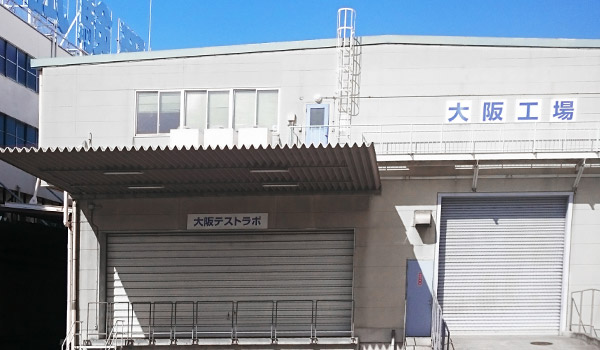
We also conduct specialized vibration tests that cannot be performed elsewhere, such as vibration testing for large specimens using multi-point control methods.
About Our Contract Testing Services
IMV CORPORATION operates 10 ISO/IEC 17025 accredited independent laboratories globally. Our expert staff provides comprehensive support for the reliability evaluation of all products—including automotive, railway, aerospace, electronics, and marine—delivering impartial, internationally recognized data.